The Cheesecake Factory
- 4.5
- Rating
- 100.00K
- Installs
- Free
- Price
 Analysis by App-foxy
I found The Cheesecake Factory most useful when I treated it as a practical companion for visiting the restaurant, rather than as a general food-discovery app. It is a free Food & Drink app from Cheesecake Factory INC, built around the restaurant’s rewards and reservation experience. That focus makes it appealing for regular guests, families planning a meal, and anyone who prefers to organize a visit before arriving instead of handling everything at the door.
My overall impression is positive, but fairly specific: this is a convenience tool for people who already choose The Cheesecake Factory. It is not the kind of app I would install simply to browse restaurants in a new city, compare several chains, or replace a broad delivery service. Its usefulness depends on how often this particular restaurant is part of your routine. If that answer is “occasionally” or “often,” the app has a clearer purpose than its short store summary suggests.
How the app fits into a real restaurant visit
The app’s central appeal is that it brings rewards and reservations into one place. In everyday use, that can remove a little friction from the usual restaurant routine: deciding where to eat, checking whether a visit can be planned ahead, and keeping track of the relationship between your visits and the restaurant’s rewards experience. I like that the app is organized around a specific dining brand instead of trying to be everything for everyone.
You May Also Like

 AccuWeather: Weather Radar
AccuWeather Review: A Quick, Clear Forecast for Everyday Decisions
For everyday plans, the best forecast is the one you can understand quickly. AccuWeather makes rain timing, radar, and local conditions easy to act on, with a few trade-offs.

 Hill Climb Racing
Why Hill Climb Racing Still Turns Crashes Into One More Run
A tiny car, a bumpy hill and one more upgrade: Hill Climb Racing keeps resurfacing because its simple chaos makes every near-miss feel personal.

 AliExpress - Shopping App
AliExpress Makes Global Shopping Feel Personal, but Shoppers Bear the Risk
AliExpress turns a global marketplace into a pocket-sized discovery engine. Its reach is useful, its shopping loop compelling, and its trade-offs easy to miss.

 Lords Mobile: Kingdom Wars
Lords Mobile Is a Kingdom-Building Routine, Not a Quick Match
A case-by-case verdict on the building, battles, device demands, and social commitments that make Lords Mobile rewarding for some players and exhausting for others.

 PDF Scanner app - TapScanner
TapScanner Makes Paperwork Easier to Capture, Check, and Share
TapScanner makes scanning with a phone feel less like a rescue operation and more like a dependable step in getting work done. Its capture tools are useful, though not flawless.

 Block Blast!
 Shows How Much a Puzzle Game Can Leave Out
A quiet grid game shows why puzzle players increasingly value instant clarity, repeatable skill and low-pressure play—and where the genre still needs to catch up.
More From Our News Desk
View All News


A realistic example would be a weekend meal with family. I could open the app before leaving, use the reservation side of the experience to plan the visit, and then use the rewards area as part of the same restaurant routine. That is more convenient than searching separately for the restaurant, switching to another service for planning, and then trying to remember where reward information is stored. The benefit is not dramatic, but it is exactly the sort of small reduction in effort that makes a brand app worth keeping.
That narrow purpose is also the first important trade-off. The app does not become more useful just because it is installed. Its value rises with repeat visits. Someone who eats at The Cheesecake Factory only once while traveling may find a mobile browser or a familiar reservation service sufficient. Someone who returns regularly has a stronger reason to keep a dedicated place for reservations and rewards.
The developer is clearly identified as Cheesecake Factory INC, and the app sits in the Food & Drink category. It is aimed at an Everyone audience, which makes sense for a restaurant-planning tool used by individuals and households. The current version is 2.0.5, while the minimum operating-system requirement is 7.0. Those details make it accessible across a wide range of devices, although actual comfort will still depend on the phone’s age and the quality of its connection.
What you get without paying for the app
The app itself is free, so there is no purchase decision at the point of installation. That matters when comparing it with paid planning tools: the question is not whether the download is worth a subscription or a one-time fee, but whether the convenience is worth giving the app space on your phone. Based on my experience with its purpose, the answer is yes for regular guests and less certain for everyone else.
Free access does not automatically mean every restaurant visit becomes cheaper, and I would not read the app as a promise of savings on its own. Its value is mainly organizational. Rewards can make the relationship with the restaurant more useful for returning customers, while reservations can make planning easier. The financial benefit of any rewards activity depends on how often you dine there and how you use the restaurant’s own program, so I would judge the app first by convenience rather than by assuming a guaranteed discount.
This distinction is important. A free app can still be poor value if it creates extra steps, but a free app with a focused purpose has a low barrier to trying it. I would install it before a planned visit, explore the rewards and reservation areas, and then decide whether it deserves a permanent place on my home screen. That is a sensible approach for occasional diners because it avoids treating the app as essential when the need may be temporary.
The app has an average rating of 4.5 from around 255 ratings, with around 140 written reviews, and it has passed 100 thousand installs. I see those figures as signs that the experience has found an audience, not as proof that it will suit every phone or every dining habit. Ratings can tell me that many people find the app useful, but the more meaningful question is whether I visit this restaurant often enough to use its focused tools.
Reservations are most valuable when plans are still flexible
The reservation function is the feature I would use most deliberately. It is most helpful before a busy meal when I know roughly when I want to eat but still have some flexibility. Instead of waiting until the group is already hungry, I can make the restaurant decision earlier and reduce the uncertainty around arrival. That is especially helpful for family meals, celebrations, or evenings when several people need to coordinate.
There is a practical habit that improves the experience: make the reservation before the group starts traveling, not while everyone is standing outside the restaurant. That gives me time to adjust the meal plan if the preferred time is inconvenient. It also avoids turning the app into an emergency tool during a rushed moment, when a slow connection or an unexpected change can feel more frustrating.
I would still keep expectations realistic. A reservation feature is useful for planning, but it does not remove the need to arrive on time or to check the details before leaving. Restaurant plans can change, and a digital confirmation is not a substitute for paying attention to the actual booking information. The app helps organize the decision; it does not make the whole dining experience automatic.
Compared with calling the restaurant, the app can feel more private and convenient because I can handle the planning without waiting for someone to answer. Compared with a general reservation service, its advantage is that it keeps the restaurant-specific experience together with rewards. The trade-off is breadth: a general service is better if I am comparing many restaurants, while this app is better when The Cheesecake Factory is already my choice.
Rewards work best as a habit, not a one-time experiment
The rewards area has more potential for regular customers than for occasional visitors. The useful workflow is to make it part of the same routine as choosing the restaurant: check the app before the visit, use the relevant rewards tools during the restaurant relationship, and review the account afterward rather than assuming everything has been handled automatically.
That last step is an easy one to overlook. When an app combines planning and rewards, I would take a moment after a visit to verify that the activity appears as expected. This is not because the app is necessarily unreliable; it is simply good digital housekeeping whenever a reward program is involved. Keeping an eye on the account can prevent confusion later, especially for people who visit infrequently and may not remember the details of their previous activity.
Rewards also change how I judge the app’s value. If I visit once every few months, the program may be a pleasant extra but not a strong reason to install a dedicated app. If I return often, the convenience of having the reward experience close at hand becomes more meaningful. In other words, the app’s free price makes experimentation easy, but regular usage determines whether it becomes genuinely valuable.
I would not compare this part directly with a bank card offer, a coupon site, or a broad loyalty wallet. Those alternatives may cover more brands, but they do not necessarily connect restaurant-specific rewards with restaurant-specific planning. The Cheesecake Factory’s app has a narrower advantage: it can make one brand’s repeat visits easier to manage in one place.
Where the focused design helps—and where it gets in the way
I appreciate that the app has a clear identity. I am not asked to sort through unrelated restaurants, food categories, or travel content before reaching the tools that matter for this brand. That focus can make the app easier to understand for someone who already knows where they want to eat. It also makes the app a more natural choice for repeat visits than a general food directory.
At the same time, a focused app can feel unnecessary when my needs are broader. If I am choosing between several nearby restaurants, looking for independent dining rooms, or comparing different reservation options, I would rather use a general restaurant platform. Installing one brand app for every chain would eventually create clutter, and this is the kind of application I would keep only if its specific restaurant tools earned that space.
Another trade-off is that the app’s usefulness is tied to account and visit habits. The more I want from rewards, the more consistently I need to use the same digital route. That can be a strength for organization, but it can also feel like extra maintenance for someone who prefers to keep all loyalty programs in one general wallet. I would choose this app when brand-specific convenience matters more than having every program consolidated.
The app is also not the right answer for someone who wants a complete meal-planning system. It can help with the restaurant side of a visit, but I would not expect it to replace personal calendars, group messaging, map tools, or a broader food-ordering service. In a group meal, I might still use a messaging app to agree on a time and a map app to coordinate travel. The strength here is not total trip management; it is reducing friction around the restaurant relationship.
Small workflows that make it more useful
My first tip is to use the app at the planning stage, when I still have choices. Opening it after arriving is less useful than checking it while deciding whether the meal fits the group’s schedule. This turns reservations into a planning aid rather than a last-minute rescue attempt.
My second tip is to treat rewards as something to review, not something to forget after signing up. I would check the rewards area before a visit and again afterward. That simple two-stage habit gives me a clearer picture of whether the program is helping and prevents the app from becoming a silent icon that I never open.
My third tip is to decide whether the app belongs on the home screen based on frequency. For a regular customer, quick access can make sense. For an occasional diner, keeping it in the app library and opening it only when a visit is planned is probably better. This is a small but useful distinction: free installation does not mean every app deserves permanent visual space.
A fourth insight is that the app is best evaluated alongside the way I already make reservations. If I normally call the restaurant and want a quieter, self-service option, this app may be a meaningful improvement. If I already use a general reservation platform for every meal and rarely visit this brand, the dedicated experience may not add enough to justify changing my routine.
Who will get the clearest value?
I would recommend it most strongly to people who visit The Cheesecake Factory repeatedly, especially those who want reservations and rewards handled through the same restaurant-specific app. Families can benefit from planning ahead, and diners who dislike phone calls may appreciate having a self-service route for organizing a visit.
It may also suit someone who is trying to make restaurant visits more deliberate. Rather than arriving without a plan, I can check the app before leaving, decide whether the timing works, and keep the rewards side connected to the visit. That is a modest improvement, but it is concrete and repeatable.
I would be more cautious about recommending it to travelers, infrequent diners, or people who already have a preferred all-in-one reservation and loyalty setup. They may install it for a specific meal, but the long-term value is less obvious. The app is not a universal food companion, and I would not pretend that its focused design is an advantage for someone who wants wide restaurant coverage.
It is also not the best choice for anyone expecting the app itself to transform the cost of dining. The download is free, but the meaningful value comes from convenience and repeat use, not from assuming that every meal will become cheaper. If the main goal is broad discounts across many restaurants, another type of service may be a better fit.
My verdict after weighing the free price against the trade-offs
The Cheesecake Factory is a worthwhile free download when I already know this restaurant will be part of my dining routine. Its combination of rewards and reservations gives it a practical role, and the focused design is more useful than a generic food app when I am specifically planning a visit there. I especially like the idea of checking the app before a meal, organizing the reservation early, and reviewing the rewards activity afterward.
My recommendation is more reserved for occasional guests. In that situation, I would install it when a visit is coming up, use the relevant tools, and then decide whether the experience was convenient enough to keep. There is no purchase price creating pressure to commit, but there is still a cost in phone space, attention, and another account-based routine.
Overall, I see this as a focused restaurant companion rather than a complete food platform. The current version, 2.0.5, gives the app a clear place in the brand’s mobile experience, while its broad device accessibility makes trying it relatively easy. I would choose it over a phone call when I want to plan a Cheesecake Factory visit quietly and ahead of time, but I would choose a broader restaurant service when I am still deciding where to eat.
My final advice is simple: install it if repeat visits, reservations, and restaurant-specific rewards all matter to you; skip it if you want one app for many restaurants. Because access is free, the sensible test is to use it for your next planned visit and judge whether it genuinely simplifies your routine. For the right diner, that focused convenience is enough to make it useful.
FAQs for The Cheesecake Factory
01What features does The Cheesecake Factory app offer?
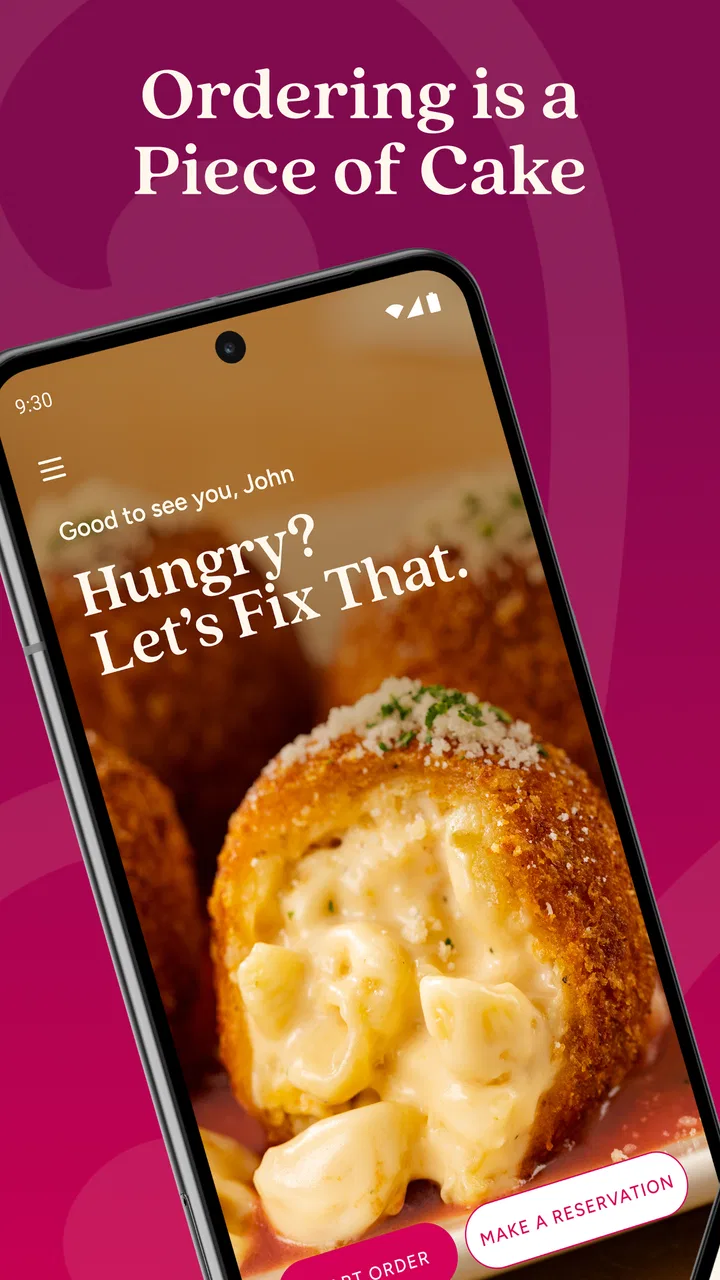
The Cheesecake Factory app provides a seamless user experience with features like easy online ordering, a complete menu with nutritional information, and a rewards program to earn points for every purchase. Additionally, users can find nearby locations, make reservations, and receive special offers and updates directly through the app.
02Is online ordering available for all The Cheesecake Factory locations through the app?
While the app supports online ordering for most locations, there may be some exceptions due to regional restrictions or specific store policies. It’s recommended to check the app for your local restaurant’s availability and menu options, ensuring a smooth ordering experience tailored to your area.
03How does the rewards program work in The Cheesecake Factory app?
The Cheesecake Factory app includes a rewards program where users earn points for every purchase made through the app. Accumulated points can be redeemed for discounts or special offers. Make sure to check the app’s terms and conditions for specific details on earning and redeeming points, as these can vary.
04Are there any special offers or discounts available through the app?
Yes, the app often features exclusive offers and discounts for users, including limited-time promotions and birthday specials. By enabling notifications, users can stay updated on the latest deals, ensuring they never miss out on a chance to save while enjoying their favorite Cheesecake Factory dishes.
05Is The Cheesecake Factory app user-friendly for those with dietary restrictions?
The app is designed to accommodate users with dietary restrictions by providing detailed nutritional information and customizable menu options. Whether you’re looking for vegetarian, gluten-free, or low-calorie choices, the app makes it easy to find and order dishes that meet your dietary needs.
Pros
- Extensive menu with diverse options.
- High-quality ingredients and flavors.
- User-friendly interface for easy browsing.
- Efficient online ordering system.
- Frequent updates with new specials.
Cons
- App can be slow on older devices.
- Occasional login issues reported.
- Limited customization for dietary needs.
- High data usage due to large images.
- Push notifications can be overwhelming.

The Cheesecake Factory
Gallery